Friday, September 7, 2007

Yanaka Coffee


A recent excursion into the Yanesen* area (a triangular section of northeastern Tokyo, the three points being Yanaka, Nezu and Sendagi) found me a damn good coffee shop. I define damn good coffee shop as a) delicious b) reasonably priced, and c) good vibes. And if they roast your beans for ya too, well, you just earned yourself some extra credit, mister!


The iced cafe au lait at the top of this post (I think they called it iced milk coffee here) was about ¥250, if I remember correctly, and was very good. While I sipped on it I browsed the 30+ coffee beans from around the world on display, chose 200g of a Columbia extra dark blend (¥1,080), and watched them roast the beans in their roaster. It takes 20 minutes, the lady told me, so I left to take a walk aroound the neighborhood.


When I returned, a warm bag of aromatic, almost chocolatey beans were waiting for me, which perfumed my handbag quite nicely for the remainder of the evening, thank you very much.

Look for this kind of entrance with dark wooden planks, spot lights and large script characters that spell out the cafe's name, やなか.


* Yanesen is perfect for a day-off or afternoon adventure. For a better explanation of the area and some very sound recommendations for spots to visit, refer to this Metropolis article.

谷根千 yanesen

Yanaka(やなか)
Sendagi Shop
2-31-3 Sendagi, Bunkyo-ku
T 0120-(877)-281 F 03-5815-8982
www.yanaka-coffeeten.com

Koiwai Gourmet Fan


...is expensive. At ¥349 a carton, it's like Christmas Day compared to the economical ¥149 Bulgaria ones. But, man it is soo good! Over coffee and a splurge over the G.S.* recently, I seriously contemplated this tendency of mine to not purchase regularly the Gourmet Fan due to the additional ¥200--and then weighed it with the joy that very same ¥200 buys me when I have a carton of it in my fridge. And guess who won? Yes, peeps, it's Christmas Day every day now!!


On the whole, Japanese yogurt is all delicious and far superior, I hate to say, to their American cousins (Tokyolites, what do you think?). The reason is simple: it is not pasteurized to death. I think in the US there are extremely strict regulations on pasteurizing dairy, and in Japan, not. (I'm not sure if there have been problems arisen from that.) So anyone who ever lands in Japan, the first thing I enthusiastically recommend you do is buy yourself some yogurt--any yogurt--and bask in its deliciousness. You will thank me. Or the yogurt company, that's fine too.

My favorite yogurt in the world (not even exaggeratin'!) is this Gourmet Fan. The stuff is made with fresh cream! How can you go wrong??


The thickened yogurt on the edge of the carton is the best.

* Oh c'mon. The Good Shit!

小岩井プレミアムクリームヨーグルト グルメファン Koiwai Premium Cream Yogurt Gourmet Fan

Saturday, September 1, 2007

Curry Dorayaki

Soooo sorry for the long absence, readers!! >_< The heat, it seemed, affected my ability to blog. That, or Facebook (it's all close call).

*****

Dorayaki are two palm-sized castella pancakes that sandwich something sweet, traditionally anko, or sweet red bean paste.


Castella itself is sweet spongy cake* (traditionally Spanish and/or Portuguese in origin but now a ultra-standard Japanese sweet which can be found virtually anywhere from fairs, conbini's to depa-chika's**), brought over by Portuguese merchants in the 16th century to Nagasaki, the international trading port at that time. Even today, it is said that the best castella in Japan come from Nagasaki.

Anko, is made by boiling heaps of azuki beans, dumping in what should be illegal amounts of sugar, and then mashing them all up until they are of your desired consistency (chunky? Smooth? Who knew Skippy had such a global perspective on his recipes?), and then cooled. Anko is used in a plethora of Japanese sweets (I'm not even exaggerating. Go ahead, count 'em! One plethora, two plethora, three plethora...). The funny thing is, lots of people don't like anko, because--here's the paradox of the century--it's too sweet. Even for Japanese people, and they're the ones who are all "ooooh, milk shakes, it's just sugar!" or "M n M's?! How can you eat so much chocolate it's so sweet!" It's like, harrro! Have never had anko you crazy person? That stuff is like diabetes to go. And the icing on the cake, of course, is that we sandwich anko with castella. (I recommend green or hojicha tea straight-up as your accompanying beverage.)

So, me. I am not a huge fan of anko, so dorayaki is something I don't buy for myself unless my Japanese sweet tooth is begging for it (my left is Japanese, my right is American). But over the summer a friend kindly brought with her extra-special dorayaki, each with a different filling including custard, pumpkin, the standard anko and--whaaat's this??--curry. As a certified, die-hard, no-nonsense curry freak (not to mention castella fan), I was elated when nobody claimed the curry dora-chan as their own and I was left to taste-test it. Dear God, please don't let it be a sugared-up curry! ...I thought, truthfully, just as I unwrapped it. But on the other hand, I was just as anxious about it being a regular salty curry sandwiched between castella.

Oh hell with it, just bite into it already!!


The only-mildly spicy curry was complemented well by slivers of almonds--it all worked to be classifed, still, as a sweet! And definitely a stylish omiyage (souvenir/gift) to give. (Especially when they are assorted so well. Thank Kahori!!)

Oh readers, you are going to kill me, I have no idea where they are from!! I'm pretty sure its in the Nihonbashi/Mitsukoshi-mae area. Anyone who finds out, do let me know!!

* To be absolutely fair, castella deserves to be called more than "cake". In fact, it's one of the best things in the world. And as a true castella lover, I'd like to refer you to the outstanding video illustrating the process of making this cake by Fukusaya, hands-down my favorite castella maker in Japan. And now I see why they're so great; they have robots working for them!! Human-looking ones!!

** Depa-chika are department store basements--"chika" in Japanese--and that's where the Japanese goverment hides all the good food from the North Koreans. Just kidding, but that is where all the good food is. From bento to deli items to designer fruit baskets to Belgium chocolates to wagashi, it's all here.


どら焼き dorayaki
あんこ anko
カステラ castella
デパ地下 depa-chika


Wednesday, August 8, 2007

Hinaya

My father is from the southern tip of Okayama prefecture in central-east Japan, right across from the large island Shikoku and home to the Mecca of sanuki udon, Kagawa prefecture. Udon are fat white noodles made of flour and often served in a lightly seasoned fish broth, served hot or cold. As with many other foods and dishes in Japan, the way they are served/prepared/made differ by region, and sanuki udon is thought to be the simplest and often best way to eat udon, especially by udon aficianados. Being as flexible as he is, my dad does justice to both the die-hard sanuki men (oh, ha ha! Men means noodles in Japanese!) and the city-slicker type at his udon restaurant in Akasaka, Hinaya.
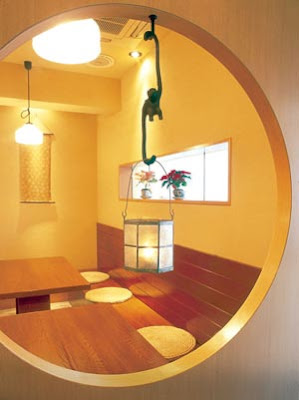

Photo courtesy of Metropolis


Kijōyu udon is an orthodox and old-skool way to eat sanuki udon. It consists simply of freshly boiled noodles (dunked in ice water to as soon as they're just the right state of al dente to keep the koshi*), and garnished with a raw egg yolk, a splash of a soy sauce mixture and a few spice condiments called yakumi, like chopped scallions or sesame seeds, and finito. Break the yolk, toss it with the noodles and it's almost like a Japanese carbonara.

* Koshi refers to the elasticity of Japanese noodles, describing the state when it satisfies all of the following: firmness, suppleness and bouciness, especially as they go down your throat, as you don't "chew" Japanese noodles so much as swallow them. Scout's honor. Actually, udon is much more about the texture than the flavor.
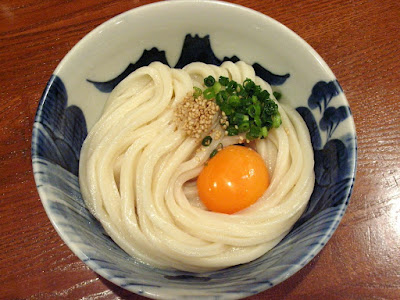


Hinaya also serves it with natto, or fermented beans, for those of you who can stomach it. For me, this is the perfect breakfast. Egg! Noodles! Natto! What's not to like?


But of course my favorite all-time Hinaya udon (and the shop's #1 menu item) is the curry udon. The only vegetables that go into the roux are onions and carrots--which are sauteed until they are soft and sweet, and then pureed. The puree, curry spices and water are boiled for hours until the roux is rich and thick, at which time she meets her soulmate, the smooth and elegant otsuyu, or dipping sauce, and poured over oodles of noodles. It's a match made in heaven, and if not heaven, at least the greater Tokyo area. Served with a soft-boiled onsen tamago egg, yakumi and toasted abura age (fried tofu, prounounced "a-gé"), it's addictive.
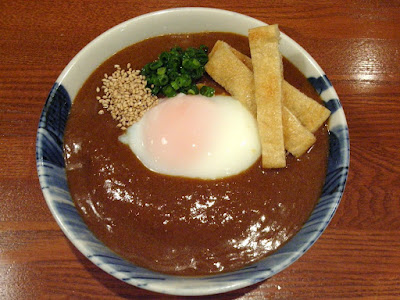


(Does this portraiture shot convey my love for this dish? I love you, curry udon.)


Other popular udon are goma dare udon, or cold udon with a savory and creamy sesame dipping sauce, and kama tama udon, served piping hot in the water they were boiled in. It's hard-core and authentic. Or something. Lunch sets at Hinaya are ¥900 (including your choice of udon, the daily rice, and two side dishes).


Oh, and by the way, my dad makes everything fresh, including the udon noodles. From the flour to the salt to the water to the width they are cut, they all have to pass dad's test, every day. The noodles themselves are vegan--flour, salt and water are the only three ingredients that go in.


men
生醤油 kijōyu
コシ koshi
薬味 yakumi
納豆 natto
おつゆ otsuyu
温泉たまご onsen tamago
油揚げ abura age
ゴマだれ goma dare

Hinaya (日南家)
2-14-7 Akasaka, Minato-ku
T/F 03-3583-0178
http://akasakahinaya.blogspot.com


Thursday, August 2, 2007

Poll


Thank you to everyone who participated in the poll!

You said you wanted to hear about restaurants in Tokyo and more about the healthy, low-fat Japanese diet and lifestyle. Also, you wanted recipes on simple, easy and delicious Japanese food. No problem!! I'll keep those themes in mind for subsequent posts. Thank you.

Peach


My favorite fruit is in-season. The peach. Fleshy, juicy, sweet and fragrant, I especially love it when the skin peels off large and easy.


Voila!


Unfortunately I only have so-so fruit markets near my house. As I'm a huge fan of fresh fruit (as you all should be, too) I'm often stuck between a rock and a hard place in Japan with designer fruits on one hand and inconsistent quality at mediocre neighborhood options in the other. In fact one of the things I miss most about Seattle and the States is the abundance of fresh, affordable produce everywhere, and if not everywhere somewhere relatively closeby: at the QFC, and if not there at PCC, and if not there at the farmers' markets, and if not there at the little trucks by the sides of the road (especially around this time of the year) and if not there at Metropolitan Market where they will probably grow that pelican mango for you if you're willing to pay them for it. Hmm, speaking of produce trucks by the side of the road.... Bing cherries!! Handfuls and handfuls of ripe, juicy, dark sweetness! Man, I miss being able to eat cherries until I feel ill. Damn.

Ah hem. Yes, fruits in Japan. Thankfully, there is one good fruit and produce market near my work. Although it is a privately owned business, it--as well as most other produce markets or greengrocers of the same nature--is referred to as the yaoya, or greengrocer. (Like the post office. Or the pool.) After purchasing the perfect peaches above (four of them) for just 400 yen, I think I'll be stocking up on my daily fruits not at home but at work from now. The friendly ojisans and obasans and one-sans at the yaoya make for a pleasant shopping experience, anyway, which just makes the purchase sweeter.


I still miss the Bing cherry trucks though. For now, a sweet, sweet memory.

八百屋 yaoya (greengrocer)


Sunday, July 29, 2007

Espresso Bar Madeleine

On the way back from our healthy-for-the-mind and healthy-for-the-body Saturday afternoon brunch at Mother Esta, we stumbled upon this cute little VW Bug Citroën 2CV (thanks eshibui!) of an espresso bar--with passerby's lined up for their coffees, but curiously no one in the driver's seat. (Literally and figuratively, folks.)


Upon closer inspection, we identified the barista...

...scrunched between the trunk, the roof, and the seat dividers. He also appeared to be the owner, and uncomfortable.


Service at Espresso Bar Madeleine is (not unsurprisingly) laid-back. If there are folks before you, you wait an extra five minutes to get your order in. But who gives, on a Saturday afternoon? If you do, you should not be in Naka-Meguro, period. Go to Shinjuku or something.

Also, Madeleine passed my iced Americano test, which is less like a test and more like a regular order of an iced Americano. (I just said it to sound cool.) Though I will drink a crappy Americano over no Americano any day, I always prefer a well-thought out, lovingly-brewed one, and am willing to pay my way for it. You see, I am from Seattle. (For those of you who get it, go ahead and skip to the next paragraph.) We have Starbucks on every face of a city block and a small business-operated cafe on every outer-city block (that or a Tully's). And most of them know exactly what they're doing. Some people say Starbucks' coffee is overroasted--not me. And I love, especially, the fresh bitterness of an iced Americano, two shots of just-brewed espresso poured over ice and then splashed with ice-cold water. That is a good iced Americano. Starbucks (usually) does it, Javasti does it and, well, almost any other cafe I frequent (-ed) does it right--in Seattle. I can't say the same thing about cafes in Tokyo, but thankfully enough cafes here serve excellent brew. Madeleine included.

I was actually doubly surprised at Madeleine; first by how cold the Madeleine barista was able to get it (I confess--I was expecting it to be luke-warm coming from a car at 2pm in July), and then at the balance of bitterness, sourness and deliciousness the drink provided. But what was even better was my friend's uji matcha latte. First the uji matcha was froathed with milk. Then the espresso was brewed into another cup. Finally, the barista gave my friend both cups and had her pour one into the other.


Pretty awesome! Now, the whole process from Americano to uji matcha completion took about eight minutes and on a Monday morning I'd perhaps border getmemyfrigginlattehomeboy, but this was Saturday afternoon, and Naka-Meguro. So my friend and I were charmed (though she may be on a Monday morning as well). What won me over completely was that the uji matcha foam was not sweetened, as many green-tea latte mixtures can be (tsk, tsk, tsk). He served both our drinks with bite-sized Japanese Meiji chocolates, complementing our coffees. We had a few minutes to chat with the owner and as he never came out of his shop/car, he mustn't have been as uncomfortable as I initially suspected. He's along the Meguro River every day except Mondays, so make sure to stop by next time you're in town.

Apparently the owner/barista bakes/serves extra extra chocolat cookies in the winter time, and something tells me they'll be more rich and dreamy than sugary. Can't wait.

宇治抹茶ラテ Uji matcha latte
明治チョコレートMeiji chocolates

Espresso Bar Madeleine
Along the Meguro River, click here for map
T 090-3500-0560
http://madeleine2.exblog.jp